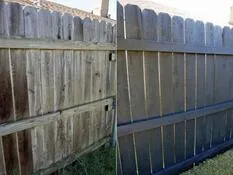
A wood fence weathers on both faces and along every edge. In Ann Arbor's damp springs and snowy winters, bare pine and cedar turn gray within a year or two. We clean the fence, let it dry and stain or paint it. New pressure-treated wood needs time to dry out before it will take a finish.
Most fences we finish in Ann Arbor are wood: cedar or treated pine privacy panels along back lot lines, and painted pickets in front of older houses near downtown. Fences live a harder life than siding. Rain reaches both faces, sprinklers wet the bottom, and soil and mulch hold moisture against the lowest boards. Snow banks sit along them in winter. Left bare, the wood grays, then cups and splits. A finish slows all of that, and it needs to reach the edges and tops as well as the faces.
The fence is cleaned first to take off dirt, gray fibers and green growth, then left to dry. Loose pickets are refastened and broken ones pointed out for replacement. Plants are tied back or covered and the ground along the line is protected. Stain can be sprayed and then brushed in so it gets into the gaps between boards. Painted picket fences are scraped, sanded and primed where bare before two coats. We keep spray away from cars, houses and the neighbor's yard, and we do not spray in wind.
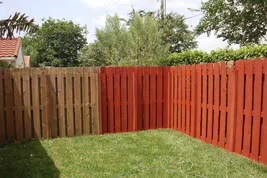
A fence has two sides and often two owners. If it stands on the boundary, speak with your neighbor before work starts, both about the color and about access to the far face. We can finish one side only, but the fence lasts longer when both are sealed. Semi-transparent stain shows the grain and is simplest to renew. Solid stain hides more and suits older, uneven wood. You get a written quote based on the length, height and condition of the fence.
Fence painting & staining in Ann Arbor: common questions
Should I stain or paint a cedar fence?
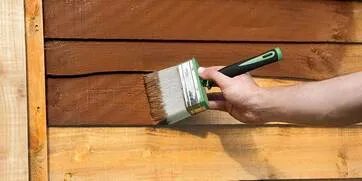
Stain suits most cedar fences. It soaks into the wood and fades over time instead of peeling, so recoating is simple. Paint gives a crisp look on pickets but needs scraping and priming when it starts to fail.
Do you need to get into my neighbor's yard to finish the fence?
Only if you want the far side done. We ask you to arrange that with your neighbor in advance. Without access we finish your side and the tops and edges we can reach.
Why are the bottoms of my fence boards rotting first?
They stay wet longest. Soil, mulch, grass and snow hold water against the end grain, which soaks it up like a straw. Keeping mulch and soil a little below the boards and sealing the bottom edges helps a great deal.
How it works
- Free estimate: Call, text or book online. We walk the job and measure.
- Written quote: Prep, paint and price in writing.
- Prep & protect: We cover floors and furniture, repair and prime surfaces.
- Paint & walk-through: Two coats, clean lines, full clean-up and a final walk-through.