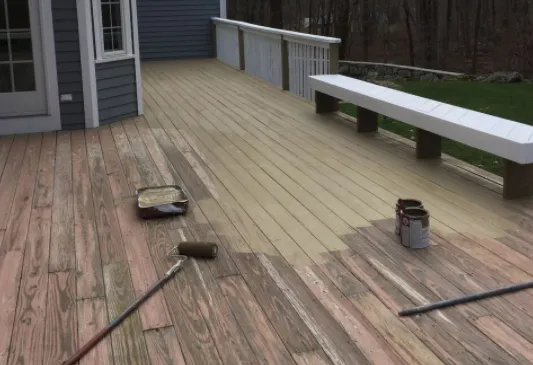
Prep is most of what makes a paint job last. Clean, dull, dry and sound: paint sticks to a surface that is all four. In Ann Arbor that often means dealing with old plaster, glossy oil-based trim and exterior wood that has been through many winters.
Do I need to prime before painting?
You need primer on bare wood, bare drywall, patches, stains, glossy surfaces and big color changes. You do not need primer on clean, sound paint of a similar color. Primer is for grip and for sealing, not for color.
Do I need primer if the old paint is in good shape, and can you paint over old paint?
Yes, you can paint over old paint that is clean, dull and firmly attached, and no primer is needed in that case. Wash off grease and dust, sand any glossy areas and spot prime repairs.
Do I need to sand the walls before painting?
Walls need a light sanding where they are glossy, rough or patched. Flat wall paint in good shape usually needs only washing. Trim, doors and cabinets almost always need sanding, because their old finish is glossy.
Do painters fix nail holes, cracks and dents first?
Yes. Filling nail holes, small cracks and dents is normal prep, and it is part of our quotes along with sanding, caulking and priming. Large holes, long plaster cracks and water-damaged areas are repairs and should be listed in the quote.
Plaster in prewar Ann Arbor homes often has cracks that come back with the seasons. These hold better when they are opened up, taped and filled, not just smeared over.
How do I paint over a water stain so it does not bleed through?
Seal a water stain with a stain-blocking primer before painting, or it will bleed through. Ordinary wall paint will not hold it back, however many coats you use. Fix the leak first and let the area dry.
Can you paint over smoke stains or pet smells?
Yes, with the right primer. Smoke and nicotine are washed off as far as possible and then sealed with a stain and odor blocking primer. Paint alone lets the yellow and the smell come back through. Pet odor in walls is handled the same way, though smell in floors or subfloor needs separate work.
Mold on the bathroom ceiling: can it just be painted over?
No. Mold painted over grows back through the new paint. Surface mildew on a bathroom ceiling is cleaned off, left to dry and primed with a stain-blocking primer, then painted with a paint made for damp rooms.
A fan that vents outdoors is the lasting fix. If the mold covers a large area or comes from a leak, it needs a remediation company. HomeGuide lists small-area mold remediation at $500 to $1,500 nationally, which is not our quote.
Paint is peeling to bare wood on my old house. What prep does it need?
Where paint has peeled to bare wood, scrape off everything loose, sand the edges smooth, prime the bare wood and caulk open joints before two finish coats. Bare wood that has gone gray should be sanded back to bright wood, because paint does not grip weathered fibers.
If the house was built before 1978, assume the old paint may contain lead and have the scraping done with lead-safe methods.
Why is my paint peeling?
When paint is peeling, the cause is almost always moisture or poor prep. Water gets behind the film, or the paint was put over dirt, gloss or damp wood. Outside in Michigan, freeze and thaw works on every crack that lets water in.
- Outside: failed caulk, leaking gutters, wood near the ground, no primer on bare wood.
- Inside: steam, a leak, or latex paint over old oil-based paint with no primer.
- Anywhere: too many old layers that finally let go.
Why is paint bubbling or peeling in my kitchen or bathroom?
Bubbling paint in a kitchen or bathroom comes from moisture or from grease under the paint. Steam gets behind a weak film and lifts it into blisters. The fix is to scrape and sand the area, prime it and repaint, and to run a fan that actually moves air outside.
How do I know if old paint is oil or latex, and can latex go over oil?
Rub the paint with a rag wet with rubbing alcohol. Latex softens and comes off on the rag. Oil-based paint does not. Latex can go over oil only after the surface is sanded dull and coated with a bonding primer.
Skipping that step is why new paint scratches off old trim with a fingernail. Much of the woodwork in older homes here still has oil-based paint on it.
Do bare drywall patches need primer?
Yes. Patches and bare drywall need primer, or they show through as dull spots. Joint compound soaks up paint differently from the wall around it. Spot prime each patch, and on a wall with many patches, prime the whole wall.
Is prep included in your price?
Yes. Surface prep is part of our jobs: patching, sanding, caulking and priming. A free estimate with a written quote is the only way to get a real price for your job. Call or text (734) 399-4198.