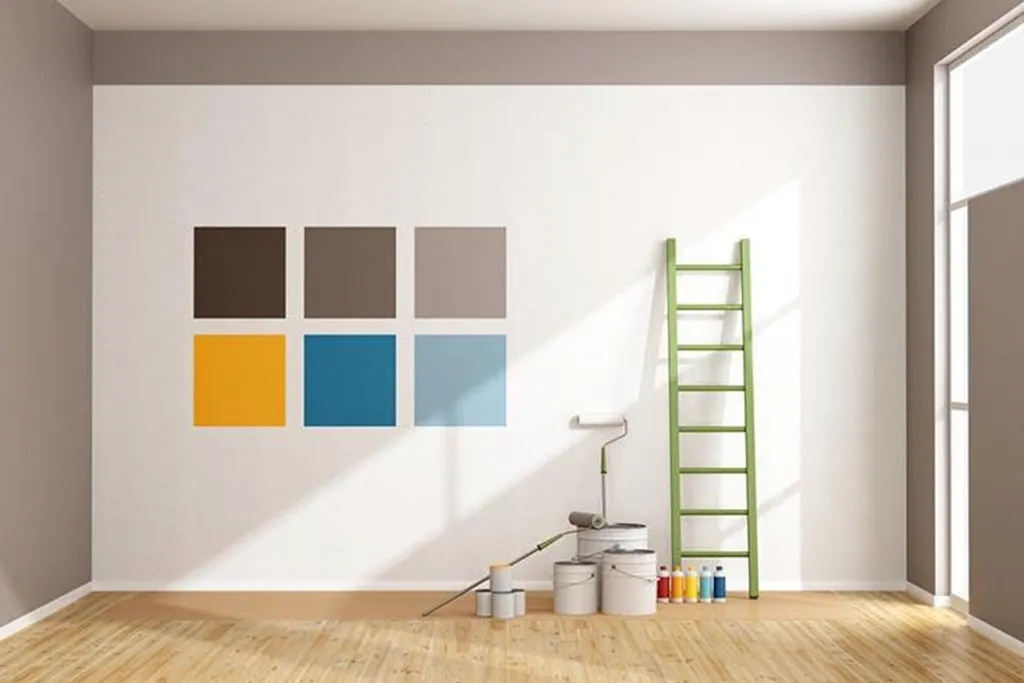
Sheen is how shiny the paint dries. Flatter paint hides flaws and shinier paint cleans more easily. Most choices follow from that one trade-off.
Where this page gives a paint price, it is a national figure published by HomeGuide for 2026, not our quote.
What sheen should I use for walls and trim?
Use a low sheen on walls and a higher sheen on trim. A common set is flat on ceilings, eggshell or matte on walls, and satin or semi-gloss on trim and doors.
| Surface | Usual sheen |
|---|---|
| Ceilings | Flat |
| Living rooms and bedrooms | Matte or eggshell |
| Kitchens and bathrooms | Satin, or a washable matte made for damp rooms |
| Trim and doors | Satin or semi-gloss |
Eggshell or satin for living room walls?
Eggshell suits most living rooms. It has a soft low glow and wipes clean. Satin is a step shinier and tougher, but it shows roller laps and wall flaws more. Pick satin where the walls take real wear.
Flat or eggshell to hide bad walls?
Flat hides bad walls best. It does not reflect light off bumps, patches and old plaster waves. Many older Ann Arbor homes have plaster that is far from smooth, and a good washable flat or matte is kinder to it than eggshell.
Should trim be satin or semi-gloss?
Either works. Semi-gloss is the traditional trim finish and the easiest to scrub. Satin is softer to look at and hides dents and brush marks on old woodwork better. On trim with a hundred years of paint layers, satin is often the better-looking choice.
What is the best paint for a bathroom or kitchen?
In a bathroom or kitchen, use a paint made to resist moisture and mildew, in a finish you can wash. Satin has been the standard. Several makers now sell matte and eggshell paints rated for bathrooms. A working exhaust fan matters more than the can.
What is the best paint for a high-traffic hallway?
A hallway needs a scrubbable paint, in eggshell or satin, from the better end of a product line. Hallways, stairs and mudrooms get hands, bags and boots, and a Michigan winter adds wet coats and salt. Cheap flat paint marks and burnishes when you wipe it.
What is the best paint for exterior walls in this climate?
The best paint for exterior walls in Michigan is a 100% acrylic latex. It stays flexible as wood swells and shrinks through freeze and thaw, it lets some moisture out, and it holds color in summer sun. Bare wood gets a primer first.
Can I use the same paint inside and outside?
No. Do not use interior paint on the outside. It is not made for sun, rain or frost and will fail quickly. Exterior paint indoors is also a poor idea, since it carries additives for mildew and weather that are not meant for closed rooms.
Does expensive paint last longer than cheap paint?
Usually yes. Expensive paint has more resin and pigment, so it covers in fewer coats, washes better and lasts longer. HomeGuide lists paint at $20 to $80 per gallon nationally. Since labor is most of a paint job, saving a few dollars a gallon rarely pays.
Is one paint brand really better than another?
The line matters more than the brand. Every large maker sells a cheap line and a top line, and the top lines of the main brands are all good. Compare products at the same level, and ask your painter which product they plan to use and why.
How many coats of paint do I need?
Two coats is the normal answer to how many coats. One coat can do for a repaint in the same color with a top-grade paint. A strong color change, new drywall or bare wood needs primer plus two coats.
How do I cover dark paint with a light color?
To go from dark to light, prime first with a high-hiding primer, then put on two finish coats. Without primer, a deep red or navy can take three or four coats of white and still look shadowed.
Why does the same color look different in different rooms?
A color looks different from room to room because the light is different. North rooms get cool, bluish light. South and west rooms get warm light. Bulbs, floors and trees outside the window shift it again. Gray winter light in Michigan makes many colors look cooler than they did in the store.
Test a large sample on two walls and look at it in the morning, at midday and at night.
What white will not look yellow?
A white with a neutral or slightly cool base will not look yellow. Whites with cream or beige in them turn yellow next to cool daylight or bright white trim. Warm bulbs also push any white toward yellow. Compare several white samples side by side against your trim.
How do I pick an exterior color that matches my roof and brick?
Start with what will not change: the roof, the brick or stone, and the window frames. Pick a body color that shares their undertone, warm with warm and cool with cool. Then choose a trim color and one accent for the door.
Look at painted samples outdoors, in sun and in shade. If you are in an HOA, check its approved colors before you settle. We offer color consulting with samples.
How much paint do I need?
One gallon covers 300 to 400 square feet with one coat, by the published figures. Add up the wall area, take off doors and windows, and double it for two coats.
HomeGuide's examples for one coat: an average room with 800 square feet of surface needs 2 gallons, and a large room with 1,200 square feet needs 3.
Should the painter supply the paint or should I buy it?
It is usually simpler for the painter to supply the paint. The painter knows the quantity and the right product for the surface, and is answerable for the whole job. If you want to buy the paint yourself, agree on the exact product and sheen in writing first.
Questions on color or sheen? Call or text (734) 399-4198.